
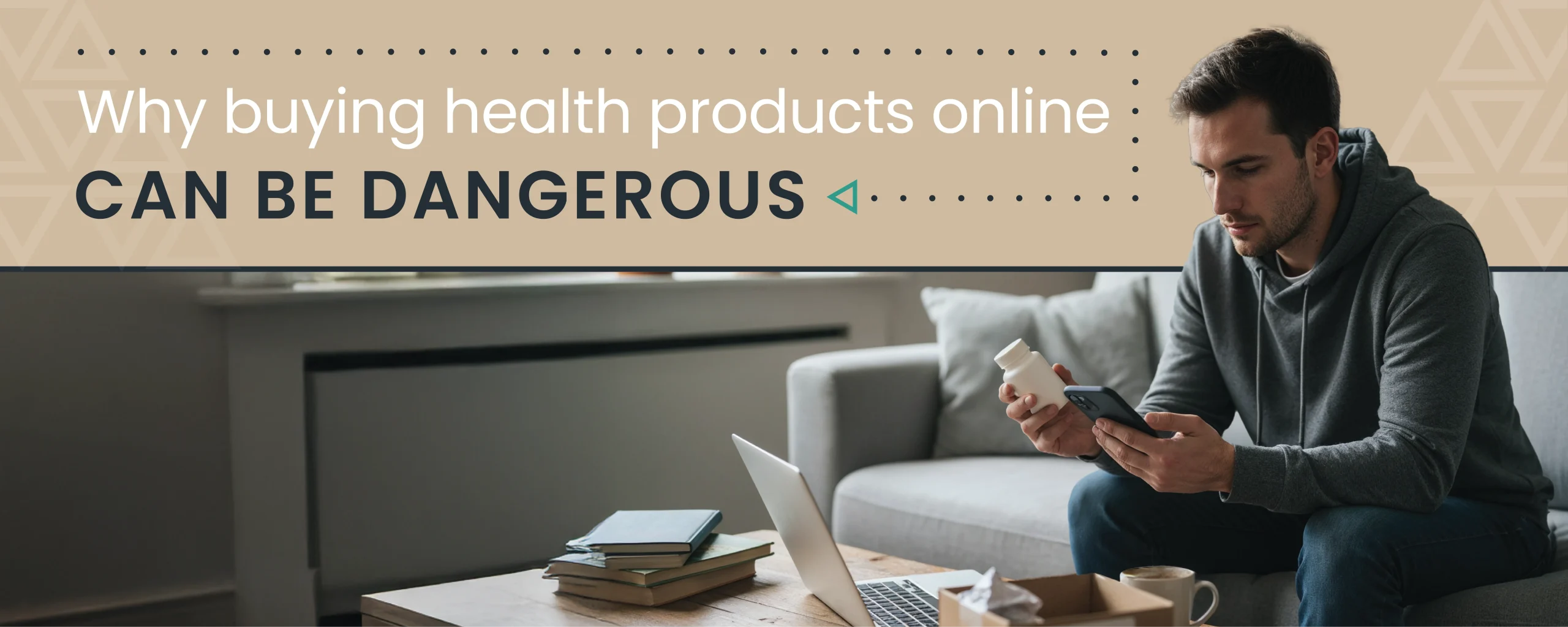
The convenience of online shopping has transformed how consumers access everything from groceries to electronics. Unfortunately, this ease has also extended into healthcare, where the risks of purchasing pharmaceutical products online are far greater.
Across South Africa, an increasing number of health products, medicines, injectables, and so-called “wellness therapies” are being sold online by companies that are not registered with the South African Health Products Regulatory Authority (SAHPRA) and do not hold a valid pharmacy licence with the South African Pharmacy Council (SAPC). This practice is not only unsafe but also dangerous, as the sale of any type of medication or pharmaceutical compound can only be done by a pharmacy.
Understanding why this matters is essential for both patients and healthcare professionals.
Healthcare Products Are Not Consumer Goods
Medicines, compounded therapies, injectables, hormones, IV nutrients, and prescription-only substances are fundamentally different from retail products.
They require:
• Licensed facilities
• Controlled manufacturing environments
• Qualified pharmaceutical oversight
• Documented sourcing of raw materials and supplier validation
• Proper storage and cold-chain management
• Regulatory approval and inspection
When these safeguards are bypassed, patient safety is directly compromised.
What SAHPRA Registration Actually Means
The South African Health Products Regulatory Authority (SAHPRA) exists to protect public health. Registration and licensing ensure that:
• Products meet strict quality, safety, and efficacy standards
• Facilities comply with Good Manufacturing and Compounding Practices
• Pharmacists and responsible persons are appropriately qualified
• Products are traceable, documented, and accountable
Any company selling medicines or health products without SAHPRA oversight is operating outside the law.
Why Purchasing Pharmaceutical Products Online From Unlicensed Sellers Is Dangerous
Here’s what’s often overlooked:
1. Unknown Ingredients and Potency
Unregistered products may:
• Contain incorrect dosages
• Use substandard or contaminated raw materials
• Include undeclared active ingredients
• Be diluted, substituted, or counterfeit
There is no regulatory assurance that what’s on the label matches what’s inside.
2. No Sterility or Quality Assurance
Injectables, IV therapies, hormones, and liquid formulations require strict sterility controls. Online sellers operating outside licensed facilities are not held to these standards, raising the risk of infection, toxicity, or treatment failure.
3. No Pharmacist Oversight
Licensed pharmacies operate under the supervision of registered pharmacists who are legally accountable for every preparation dispensed. Many online sellers bypass this entirely, offering health products with no professional review, counselling, or clinical checks.
4. No Legal Recourse or Traceability
If an adverse reaction occurs, unregistered sellers offer no traceability, batch records, or regulatory accountability. This leaves patients exposed with limited options for investigation or protection.
The Illusion of “Wellness” Marketing
Online platforms often rely on persuasive language: “natural,” “bioidentical,” “anti-aging,” “ research,” “detox,” or “longevity-enhancing”—to create a false sense of safety.
But marketing language does not equal regulatory approval.
Any company selling prescription-only substances, injectable therapies, or compounded medicines directly to consumers, without proper licensing, is operating unlawfully, regardless of how professional the website may appear.
Why Healthcare Professionals Should Be Concerned
When patients self-source therapies online:
• Treatment plans may be undermined
• Drug interactions go unchecked
• Dosage consistency cannot be guaranteed
• Clinical outcomes become unpredictable
This places both patients and practitioners at risk and erodes the integrity of responsible healthcare delivery.
How to Identify a Legitimate Provider
Before purchasing or recommending any health product, patients and practitioners should confirm that the provider:
• Is registered with SAHPRA and SAPC by checking their online registers, which is open to the public
• Operates under a valid pharmaceutical licence
• Dispenses medicines through licensed pharmacy channels
• Requires a valid prescription where applicable
• Provides access to a registered pharmacist
If these criteria are not met, the product should be avoided.
Buying health products online from unregistered sources is not a harmless shortcut—it is a serious safety and legal risk.
Healthcare products are regulated for a reason:
to protect patients from harm, ensure consistency, and uphold professional standards of care.
When it comes to medicines and therapeutic products, convenience should never come at the cost of safety, legality, or clinical integrity.
